However, over the past year, federal funding for organizations providing direct services to vulnerable groups has shrunk dramatically. This has put extraordinary pressure on foundations and other private funding streams to “make up” the difference – an ask that, as we have discussed elsewhere on this blog – is simply not feasible in light of the scale of government funding.
In a recent article, I provided some overall lessons learned from a year of grantseeking under the second Trump administration. Here, I dive a bit deeper into what we are learning from our partners operating in the social services sector, including key action steps that the most successful organizations are taking to adapt.
What changed in 2025?
Without a doubt, nonprofits supporting the most vulnerable groups saw a dramatic increase in need at the same time that federal funding cuts to essential programs rolled out throughout the year.
Specific observations that our teams supporting Elevate’s partners in the social services made over the course of the last year included:
Housing first is under attack
Under the current administration, federal policy is rapidly shifting away from a housing first model – an evidence-based approach that prioritizes stable or permanent housing for individuals experiencing homelessness without precondition and before addressing any of the underlying issues that led to homelessness in the first place.
Housing first approaches were developed in the early 1990s. Since then, housing first interventions have become the gold standard for nonprofit housing programs nationwide, and they serve as the basis for most state and federal housing funding streams.
Organizations providing housing services face the very real possibility that public funding will continue to dry up for housing first programs.
The need is extraordinary (and growing)
Over the past year, social service providers that offer case management services saw record high numbers of community members reaching out for help navigating public benefit systems, employment barriers, health services, child care, and more.
Furthermore, with increasing unemployment and skyrocketing insurance costs, there is more and more pressure on agencies providing affordable (or free) health services.
Private foundations won’t replace government dollars
Even while public funding dwindles for direct social services, private funders by and large remain uninterested in providing funding for ongoing, direct services like food pantries, case management, and housing supports.
This is noteworthy, as it is not the same behavior that we saw from grantmakers during the COVID-19 pandemic. At that time, many private grantmakers offered rapid response funding to address direct service needs. Foundations did not provide the same type of support services in 2025.
The competition is fierce, and grantmakers are taking action
Finally, as I discussed in my last article, we saw a number of grantmakers close application portals before the published submission deadline, while others required additional application steps with little notice to grantseekers.
One potential cause of this unfortunate trend is the significant increase in applications from organizations looking to replace public funding; foundation staff are simply overwhelmed by the volume of applications, and these steps serve to limit the number of proposals to review and respond to.
How are Social Service providers responding?
While these changes resulted in an extraordinary burden on human service providers, Elevate’s clients in this space took action to rise to the challenges presented. Our most successful partners adapted in a few key ways.
Leverage Individual Donor Fundraising Campaigns
Several Elevate clients turned to their base of individual donors, establishing substantial fundraising campaigns designed to meet acute, time-sensitive community needs. For example, when SNAP funding was paused and other public benefit programs shrunk due to increased eligibility requirements, our partners appealed to donors to help meet the needs of their community members.
Align Programs to Policy Priorities
Some organizations identified the opportunity to launch new programs in 2025 that were mission-aligned and addressed specific community needs, but which also remain aligned with public policy trends.
For example, organizations that sought support for addiction programs and mental health services were more successful than those that continued to focus on housing first initiatives. And, even with the recent threats to addiction and mental health services, bipartisan support for nonprofits meeting these community needs has effectively insulated these programs from more dramatic cuts to public funding.
Steward Existing Funder Relationships
Building strong relationships with your funding partners is key to any successful grant program. (If you’ve read an Elevate blog, participated in a webinar, or engaged us for grant writing services, you have likely heard us beat the drum for cultivation and stewardship!)
So it is no surprise that this tactic is key to adapting to the changes in grantmaking that we’ve seen over the past year.
Our most resilient partners in the human services sector have focused on funder stewardship, with a particular eye toward anticipating application cycles and identifying opportunities to submit grant reports and proposals early.
Nonprofits that invested in their relationships with their current funders were able to cut through the noise by maintaining relationships with program officers, differentiating their requests for support from other organizations competing for limited funding, and staying on top of their grant and report deadlines.
Are you looking for more analysis from Elevate on the trends we are seeing in grantseeking across our dozens of nonprofit partners?
Check out our observations on How 2025 Changed Grantseeking overall, and read this article from August 2025 which captures our data analysis on How the Public Funding Landscape is Shifting for Nonprofits.
And, if you’re interested in exploring how Elevate can support your organization to rise to the current challenges across the sector, we invite you to get in touch with our team! We’ll be glad to schedule a meeting to discuss your unique needs.
While the past 18 months have been marked by chaos and uncertainty, one thing is certain: 2025 undeniably changed the nonprofit sector.
Many of us are hoping that we can leave some of these changes in the past. However the reality is that many of the changes we’ve observed will drive planning, decision making, and fundraising results for nonprofits in 2026 and beyond.
At the same time, not all funder landscapes are impacted the same way; what is working (or not) for education groups is not the same for those operating in the human services space, for example.
Over the course of 2025, I hosted weekly sessions with Elevate staff to assess in real-time how grantseeking was changing for our nonprofit partners, and how we could support them in meeting the moment.
In this article, I have summarized the takeaways we captured for 2025 and what these mean for grantseekers in 2026. In subsequent articles on Elevate’s blog, I examine the specifics for those working in the areas of human services, education, the arts, and advocacy.
4 Key Strategies for Navigating the Changing Funding Landscape
Across all issue areas, there are some key strategies that Elevate teams and our nonprofit partners are using to navigate the changes to grantors’ interests, the timing of funding requests, and application requirements:
1. Prioritize Funder Stewardship
Many grantmakers are doubling down on support for their current grantees and are not accepting new applicants. In such cases, leaning into existing relationships with funders is the only path forward.
See the Meyer Foundation, for one example, which states on its website that: “In 2026, nonprofit organizations and communities across our region are navigating significant uncertainty and disruption. In response, the Meyer Foundation will focus its resources on sustaining existing partnerships and will not accept new grant applications this year.”
In other cases, foundations with open application processes were inundated with new requests. This led some to close application portals early, while others pivoted to make larger investments in existing grantees, rather than entertaining an overwhelming pool of new requests.
In this context, the most strategic nonprofit organizations are doing everything they can to stay in close communication with their key funders. If your funding needs have changed – whether due to a decrease in public funding or a new program to support your community – make sure your current grant partners clearly understand this.
Proactive communication also mitigates risk when grantors abruptly change their priorities, application timelines, and requirements; if you’re regularly communicating, you’ll be in the know when these changes come to light, so that you can be prepared to pivot your funding request as appropriate.
Because the landscape is shifting so quickly, private foundations are more cautious about investing in new organizations or issues that they don’t already know a lot about. Securing a grant from a new funder or increased funding from an existing partner is still possible, but it will result from trusting relationships (not cold requests).
2. Make the Most Flexible Ask
Whenever possible, ask funders for general support or funds that can be applied across a wide range of expenses or programs, rather than focusing your request on a specific project or program area.
While we have issued this advice to our partners even in times when the context was less turbulent, it is even more important during times like these when revenue streams and community needs are rapidly changing. This approach helps ensure that, even if your programs or priorities must shift unexpectedly, you can still fulfill your commitments to funders.
3. Forecast Funding Conservatively
While we are proponents of using your renewal grant calendar as a basis for future revenue projections, this is no longer the most prudent practice. Organizations cannot rely on past grant revenue totals to build their budgets.
Forecast future funding by closely reviewing all of your current funders. Examine their giving history and their likelihood to renew funding for your work, based on their public statements and individual conversations you have with program officers about how your work aligns with their own changing giving strategies. This practice will help you to plan appropriately for the uncertainty that lies ahead.
4. Position Your Work in a More Competitive Context
Across the board, there is increased competition for private grant dollars. This is due in large part to extraordinary cuts to public funding, which has pushed nonprofits that were largely publicly funded to pursue other revenue streams. Even those that were not immediately impacted by the loss of public funding are seeing greater competition for private dollars.
Telling a clear, authentic, strategic story that speaks to each prospective funder has become more crucial than ever.
In addition to these global strategies that can be applied across the board, we have learned that different funding landscapes are reacting very differently to public policy and funding changes in 2025 and 2026. Watch this space for specific guidance and key lessons learned by sector that will be outlined in subsequent blog articles.
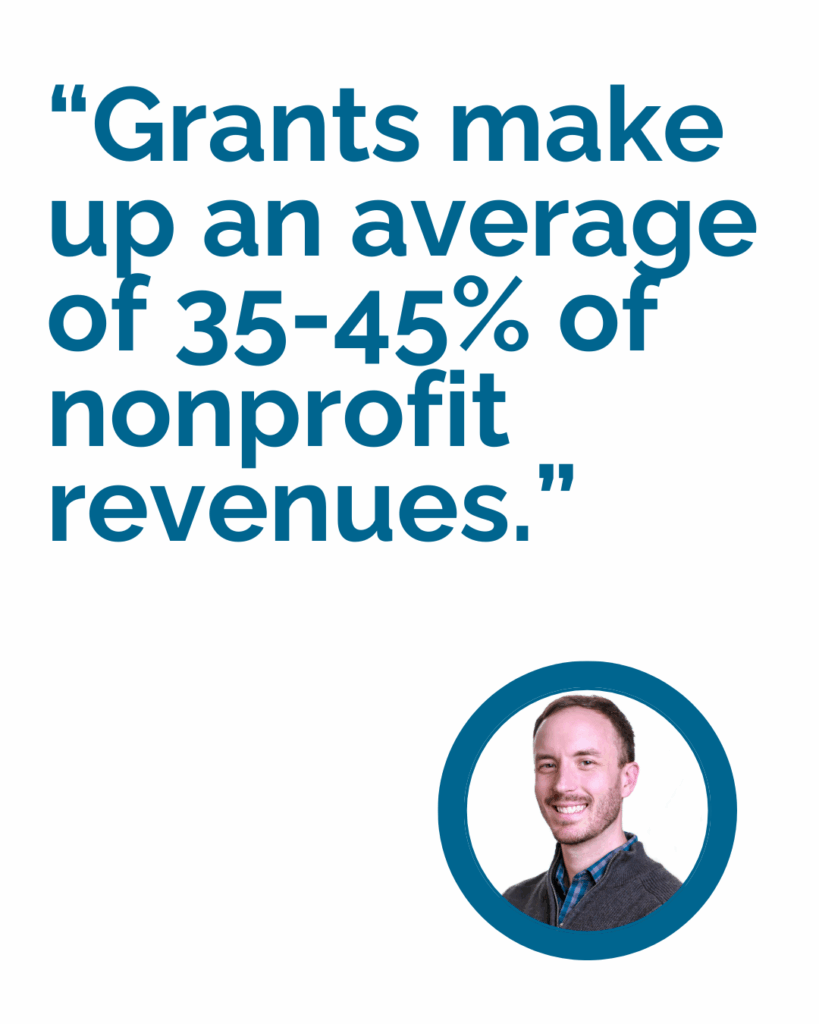
Grants are one of the foundational pillars of the nonprofit industry. Whether from government agencies, private foundations, or corporate social responsibility arms, grant funding is estimated to make up an average of 35-45% of nonprofit revenues. Behind these numbers lie hours of research, strategy, cultivation, planning, program implementation, persistence, and patience.
When you begin submitting requests to foundations, you should have the organizational infrastructure in place to not only prepare competitive applications that articulate the change your organization creates, but also to demonstrate that you are in a position to effectively steward the grant funds and maximize the impact of the award.
So how do you know if it’s time to begin investing into a grants program? The Elevate team has identified key benchmarks of organizational readiness that we consider to be essential to establish before investing in a grants program.
1. A Theory of Change
While it is not typically required to have a formally documented Theory of Change, your organization should be able to succinctly explain
the who, what, how, and why of your work. Make sure that your Theory of Change is aligned with the mission and capacity of the organization. With this framing, you’ll be positioned to have meaningful conversations with grantmakers and develop the detailed narratives, workplans, timelines, and budgets that may be required as part of the grant application.
2. Core Funding
While grants may ultimately make up a significant portion of an organization’s revenue, they are not generally the first funding sources for new nonprofits. This can be attributed to a variety of factors, including the long timeline to receive funds and grantmakers’ interest in investing in organizations with a track record of successful outcomes and predictable results. Grant work requires an up-front investment, meaning that in most cases, organizations will need to have other revenue streams support their work until the grants start coming in. In fact, most organizations do not see grant dollars in the door sooner than 9-18 months after they begin the process of researching and pursuing new grant opportunities.
3. Financial Infrastructure
Relatedly, grant applications typically require you to submit organizational and program budgets, accounting records, and audited financial statements. Before approaching a funder, be sure your organization has the proper financial infrastructure to track, administer, and report on the use of funds. Failing to do so can mean the end of a relationship with a funder.
4. Established (and Effective!) Programs
Similar to your Theory of Change, you should have an established program or programs with clearly defined activities, outputs, and outcomes, as well as a plan for how you will use funding. These programs should have clearly defined metrics for impact and success that you can track and report out on. In most industries, this doesn’t need to be a professional third-party evaluation, but you should be able to outline the specifics of your activities and how you know if they have been successful.
5. A Clear Understanding of the Landscape
Before investing time and resources into a grant program, research your organization’s funding landscape, including which grantmakers are supporting peer organizations (an indication that they may be interested in your work) and what type of grant funding is available (such as program-restricted funding, general operating grants, or capacity building). This knowledge enables you to develop plans for your grant program that are grounded in the reality of available funding opportunities. However, grants are not the right funding stream for every organization. An analysis of your landscape can help you to understand whether it makes sense to invest in a grants program, and if so, how to focus your efforts.
Elevate can help organizations with this through a Peer Landscape Analysis Project! Reach out to us to learn more about how to get started.
6. Capacity for Researching and Writing Grants
As I’ve hopefully conveyed, establishing a successful and sustainable grants program requires dedicated capacity and strategy. While it may be feasible for executive or program staff to write an application here and there, if your goal is to develop a robust grants pipeline, it will require significant research, cultivation, proposal writing, reporting, and stewardship. Organizations with limited resources should be creative about how to create and maintain this capacity. Consider dedicating a portion of staff time to these responsibilities, and encourage your board to contribute their time to these efforts. For organizations that need a capacity boost for a few proposals a year, Elevate’s Writing Capacity Projects might be the right fit.
We hope that this list provides a helpful starting point for organizations that are launching a grants program. If you need assistance in tackling one or more of these benchmarks, Elevate’s Grants Accelerator Project Suite can help! We offer a variety of short-term projects focused on these building blocks for a new grants program. Contact us today if you are interested in learning more!
Executive Order on “Increasing Oversight of Federal Grant Making”
What Nonprofits Need to Know Now
Since the new administration took office earlier this year, Elevate’s nonprofit clients continue to be impacted by a wide range of Executive Orders. A recent Executive Order issued August 7, 2025 makes substantial changes to the development, decision-making, and disbursement of discretionary grants at the federal level. This article summarizes some of the most salient details for nonprofit organizations.
What Happened & Immediate Ramifications
On August 7th, President Trump’s White House published an Executive Order designed to “improve the process of Federal grantmaking while ending offensive waste of tax dollars.”
Short-term, the most significant impacts of this Executive Order are that
1. All federal agencies must pause any new funding until they designate a senior appointee to oversee all discretionary grant processes according to the new requirements in the Executive Order.
A senior appointee is intended to be a political appointee, not a career civil service staff member.
2. Within 30 days (so by September 7th), each agency head will review the agency’s standard grant terms and conditions for compliance with the new Executive Order and submit a report to the Director of the Office of Management and Budget.
What this means for nonprofits right now:
- If you were anticipating a new NOFA or RFP in the next few months for a federal discretionary grant, it will likely be delayed.
- If you currently have a discretionary grant from any federal agency, you may be required to agree to updated terms and conditions allowing the government to, for example, terminate the grant at any time or require additional documentation to draw down funds (more on this below!).
What Does this Executive Order Mean For My Organization?
Beyond the short-term ramifications, there are a variety of new requirements for federal agencies that focus on increased oversight of all aspects of discretionary grant funding, from the development of initial RFPs and NOFAs to disbursing funds and canceling grants.
Here are five changes to federal discretionary grantmaking all nonprofits should know:
1. The Executive Order is limited to discretionary funding, sometimes referred to as competitive grants. It does not include programs where legislation establishes an entitlement to the funds on the part of the recipient, such as block grants; those awarded based on a statutory formula; or disaster recovery grants. Many nonprofits Elevate works with receive federal funding primarily as pass-through funds from their local government. In many cases, this Executive Order will not affect those funds.
 Key Action Step: Make sure you know the original funding source of any pass-through grants. Block grants, such as Child Development Block Grants or Community Development Block Grants, are not directly affected by this Executive Order. If your local government has applied for and secured competitive federal funding and then re-granted to you, those funds may be at-risk.
2. Organizations that are currently funded via a discretionary federal grant or that are planning to apply for a discretionary grant in the future should be aware that they may be required to agree to new terms, particularly the government’s right to cancel the grant at any time (“termination for convenience”), including when the award no longer advances agency priorities or the national interest.
It is worth noting that there are several active lawsuits challenging the government’s cancellation of environmental and climate justice grants via the Environmental Protection Agency, public safety grants via the Department of Justice, and agricultural and food insecurity grants from the US Department of Agriculture. All three lawsuits argue to some degree that the cancellation of this funding was unlawful because grantees were implementing programs and services aligned to the original intent of the grants and that the Executive Branch cannot cancel existing grant programs due to changing political priorities or agency goals. Notably, federal judges have ruled in several of these cases that the federal government needs to restore funding to all canceled grants while the lawsuits are ongoing, one as recently as August 14th.
However, with the implementation of this Executive Order and the nuance of the legal argument – that the initial cancellations were not well-justified or lawful under current government policies and regulations on grant awards – there is a real possibility that future federal grants will be more easily terminated, even if these lawsuits successfully establish that recent cancellations were unlawful.
 Key Action Step: Factor the potential cancellation of current or future federal grants into your contingency planning. If discretionary grants can be terminated based on policy changes at the federal level, they will represent greater operational risk to nonprofits.
3. Organizations receiving federal grants in the future will be required to provide justifications for each draw down of funds, including documentation. While this is, to some extent, already required for many federal grants, experts generally believe it will introduce additional administrative burden for organizations seeking to actually spend awarded funds.
 Key Action Step: Plan ahead for future disbursement requests. Check-in with finance and program staff to ensure that their recordkeeping is effective and will support detailed justifications for the future draw-down of funds.
4. The eligibility and review criteria for federal proposals is shifting. Organizations seeking federal funds should be aware that the new political appointees for each agency will be looking for the following criteria when approving discretionary grants:
a. Funds advance the President’s priorities;
b. Funds cannot be used to fund, promote, encourage, subsidize or facilitate:
i. Racial preferences, including activities for which race or intentional proxies for race are used to determine employment or program participation,
ii. Denial by the grant recipient of the sex binary,
iii. Illegal immigration,
iv. Any other initiatives that compromise public safety or promote “anti-American” values;
c. Grants should be given to a broad range of organizations;
d. Grants should be given to organizations with lower indirect cost rates, if all other considerations are equal.
It is worth noting that the language here – “promote, encourage, subsidize, facilitate” – encourages government agencies to decline grant awards for organizations that do not align with their philosophies, even if the specific requested grant funds are aligned. Moreover, the mandate that funds cannot be used for anything that the government deems as a threat to safety or American values is sufficiently broad to be used in a wide variety of contexts by current and future administrations to limit, cancel, or refuse disbursement of grant funds.
 Key Action Step: While Elevate has successfully helped many organizations thoughtfully assess whether their work does or does not align with the President’s priorities and identified a path to maintain existing funding or secure new funding in many cases, these criteria will likely exclude many nonprofits from all federal funding for the foreseeable future. This may mean that organizations need to transition to a contingency plan that does not include federal funds, which will require reducing expenses in the short-term. Long-term, this shift in federal funding policy and philosophy does incentivize nonprofits to look into other funding streams, including private philanthropy, individual donors, and earned revenue.
Additional Resources
We have summarized the most important points for our client organizations and others like them – U.S. based nonprofit organizations in all sectors with budgets between $1 million and $135 million that rely on private and public grant funding. We work less often with institutions of higher education or research institutions, both of which are heavily impacted by this Executive Order, and we recommend these organizations reference more comprehensive guidance provided by the following excellent resources:
Finally, earlier this year Elevate hosted a 3-part virtual conversation series on Navigating Uncertainty in the Funding Landscape. Key takeaways and resources from these sessions are summarized in three separate articles on this blog:
Would you like a downloadable version of this article to save or print and share? Click the button below to access a PDF of the article.
DOWNLOAD THE ARTICLE
Whether you’re a recent graduate or exploring a career change, grant writing might be on your radar. If you’re passionate about the work of nonprofits and have strong writing skills, this path can offer meaningful, impactful work. But how do you break into the field?
Here are four ways to get started:
1. Understand what a grant writer’s day-to-day looks like
The responsibilities of a grant writer can vary depending on the setting.
If you work in-house at a nonprofit, you’ll likely focus exclusively on that organization’s fundraising strategy—often managing everything from prospect research to proposal writing to reporting. You may be the go-to person for all things foundation funding.
If you work at a consulting firm, like Elevate, you might juggle a portfolio of nonprofit clients across different issue areas. Your day could include writing proposals, meeting with clients to discuss grant opportunities and collect info, collaborating with colleagues, and adapting your voice and strategy to fit each client.
If you are a freelance grant writer, you may spend time “selling” your services – identifying organizations in need of writing support, and building relationships with them so they come back to you for multiple projects. You’ll work largely independently to prepare and submit grants for your clients.
Want to get a clearer picture of what these roles entail? Check out job postings on:
2. Build your technical grant writing skills
Grant writing is its own distinct form of writing—different from creative writing, academic work, or journalism. To be successful, you’ll need to learn how to make a clear, compelling case for funding within the structure and constraints of a foundation’s guidelines.
There are a number of free and low-cost resources to help you learn:
- Candid offers live and on-demand training on everything from proposal basics to advanced topics like collaboration and funder relationships.
- Elevate’s free webinars, led by our team of experts, walk you through key grant writing principles and offer practical tools to strengthen your fundraising.
- You might also check out Elevate’s blog post on our favorite grant writing books.
3. Get hands-on experience
Once you’ve learned the basics, put your skills to work.
Volunteering is a great way to get practical experience and build your portfolio. Many nonprofits—especially smaller ones—need support with grant writing and may be open to volunteer help. Try searching platforms like VolunteerMatch for virtual or local opportunities.
If you already work for a nonprofit, but not in a grant writing capacity, express your interest in learning about grants. Ask the development team if you might help with grant preparation, in order to build your skills while writing about a topic and organization you’re already familiar with. Many Elevate staff made their way into grantwriting through other nonprofit roles!
4. Stay connected to the field
The nonprofit landscape is always evolving, and staying plugged in will help you grow.
Subscribe to newsletters or join your local chapter of:
These organizations offer professional development, networking, and a sense of community with others in the field.
Takeaways from Elevate’s Conversation Series: “Leadership in Challenging Times”
In a time of shifting funding priorities and operational stress, nonprofit leaders across the country are being asked to do more—with less certainty, fewer resources, and often, a heavier emotional load.
As part of Elevate’s 2025 Conversation Series on navigating funding uncertainty, our third and final session—Leadership in Challenging Times—brought together a powerful panel of nonprofit leaders who are living this reality every day. On March 27, 2025, we were joined by three leaders who shed light on what we can learn from challenges in the past and move forward strategically. Our panelists included Melanie Lockwood Herman, Executive Director of the Nonprofit Risk Management Center; Laura Rodgers, Chief Impact Officer for JFS in Atlantic & Cape May Counties in New Jersey; and Rebecca Parlakian, Senior Director of Programs at Zero to Three.
From managing burnout to staying mission-focused during cutbacks, these leaders shared real-world lessons that go beyond theory and into practice.
Here are three key insights we took away from the discussion:
1. Be Transparent—Even When the Answers Aren’t Clear
One of the biggest themes to emerge throughout our discussion was the importance of clear, consistent communication with staff and stakeholders—even when outcomes are uncertain.
Laura Rodgers described how her team shifted internal communication norms during COVID-19 and has continued that practice through today’s challenges. Weekly email updates became a staple—keeping staff informed, aligned, and valued.
Meanwhile, Rebecca Parlakian noted how frequent communication builds trust with funders and helps to manage expectations during shifting program needs.
“It’s okay to say, ‘I don’t know yet’ — just keep people in the loop.”
In other words, transparency in communication doesn’t require having all the answers. It does require being honest about what’s known, what’s evolving, and what’s still to be figured out.
2. Prioritize Staff Well-Being Like It’s Mission-Critical—Because It Is
In the nonprofit world, burnout isn’t just a buzzword. It’s an organizational risk.
Melanie Herman reminded attendees that people are any organization’s most valuable asset—and also its most vulnerable.
Panelists discussed how they are:
- Offering flexible scheduling and time-off policies,
- Creating space for rest without guilt, and
- Setting clearer boundaries around workload and urgency.
Rodgers even described intentionally slowing the pace of meetings and internal decision-making, signaling to staff that it’s okay not to be in constant “crisis mode.”
“We can’t serve our community if we’re not supporting ourselves first.”
For more on how nonprofits can take action during turbulent times, check out our related blog post: 4 Things Nonprofits Can Do Now, to Better Adapt to Uncertainty
3. Shift the Frame from ‘Loss’ to ‘Learning’
As funding fluctuates and programs change, it’s easy to fall into a scarcity mindset. But all three panelists emphasized reframing as a leadership tool.
Instead of focusing on what’s being lost – whether that’s funding, programs, or metrics – leaders are helping their teams ask:
- What have we learned from this transition?
- What do we want to carry forward?
- How can we build back better—not just bigger?
Parlakian shared how her team used program changes as an opportunity to realign work more closely with community needs. In other words: constraint became a catalyst for innovation.
“This is a moment for mission clarity—not mission creep.”
Final Thought: There’s No Playbook, But There Are Peers
If there’s one thing that came through clearly during this conversation, it’s that no nonprofit leader is alone in feeling the weight of this moment.
Whether you’re making tough calls about the future of your organization or its programs, supporting exhausted staff, or navigating uncertainty with your board, there’s strength in shared experience. There’s wisdom in the field.
And there’s value in creating space—for listening, for adjusting, and for leading with care.
Additional Resources
Explore other resources and insights from the Navigating Uncertainty series:
 Raquel Braemer
Associate Vice President of Continuous Improvement
Website Bio
In the nonprofit sector, uncertainty is nothing new. But the current funding landscape—with declining federal support and growing pressure on private philanthropy—has pushed many organizations to the edge of their comfort zone.
That’s why Elevate’s second session in our 2025 Conversation Series struck a chord. Titled Doing Less with Less, the virtual event on March 6, 2025 brought together leaders from across the country to face today’s biggest challenges head-on. We were joined by Elevate’s Founder and CEO, Alayna Buckner, as well as the Co-Founder and CEO of 20 Degrees, Sara Gibson. Alayna and Sara provided thoughtful and practical advice for nonprofit leaders at this moment of uncertainty.
Here are the five questions nonprofit professionals are asking most—and the practical steps you can take right now.
1. What should I be doing right now?
Let’s face it: being a nonprofit leader today means holding uncertainty in one hand and responsibility in the other.
Here’s what to focus on:
- Do an exposure assessment: Evaluate your programs and funding sources. Which initiatives or budget line items are most at risk if grants or federal dollars are cut?
- Plan for multiple futures: Think worst-case, best-case, and everything in between. Give each scenario a name (yes, really—it helps make the process easier to manage).
- Strengthen your relationships: Talk to your board, funders, elected officials, and peer orgs. Communicate early, clearly, and often.
These early steps align with the mindset we explored in this previous blog post on adapting to uncertainty, which offers additional ways to stay grounded and proactive before making major decisions.
2. How do I make decisions when the future is uncertain?
No one has a crystal ball. But that doesn’t mean you can’t plan.
Smart moves to make now:
- Clarify your criteria: Get grounded in your mission, values, community needs, and financial picture.
- Differentiate major vs. routine decisions: Don’t freeze. Some choices—like whether to backfill a role—can buy you time while you wait for more clarity on the larger, strategic decisions you’ll need to make.
- Explore your option set: Cutting costs, shifting resources, pausing programs, or pursuing mergers are all on the table.
Bonus tip: Download 20 Degrees’ Resilience Roadmap for a hands-on framework to help guide your planning process.
3. What should I do if there’s just not enough funding?
It’s a hard truth: sometimes the numbers just don’t work.
What to do when you’re facing shortfalls:
- Get clear on your tipping point: Know the exact conditions that would lead you to pause or end a program.
- Create a closure checklist: Have a plan for winding down responsibly, including how you’ll communicate with stakeholders, other organizations where you can refer clients, and the methods in which you’ll document learnings.
- Plan for a comeback: If funding comes back down the line, you’ll want to be ready to relaunch.
 Remember: your mission is bigger than any single program. That mindset shift can make these decisions a little less painful—and a lot more strategic.
4. How do I make time for planning when I’m already swamped?
You’re juggling more than ever, and now you’re supposed to plan on top of that?
Try this:
- Honor your energy: Schedule planning time when you’re most focused—even if it’s just 20 minutes a week.
- Share the load: Involve your senior team and your finance folks. This doesn’t have to be a solo project.
- Make a “stop doing” list: What can you pause for the next 4–6 weeks to free up space for the work that matters most?
 Planning doesn’t need to be perfect. It just needs to start.
5. How do I get my Board more engaged right now?
When funding shifts, your board’s role becomes even more critical—but also more complex.
Tips for stronger board engagement:
- Communicate early and clearly: Avoid surprises. Consider holding a special meeting with a single-issue agenda.
- Balance realism with possibility: Share challenges, but also offer a path forward. Help them stay hopeful and informed.
- Clarify expectations: Your board probably won’t fill budget gaps—but they can help advocate, fundraise, and spread the word.
And remember: business-minded board members may need extra guidance to understand the social sector’s priorities and constraints.
Final Thoughts
 You don’t need to have all the answers. But you do need a plan—and the willingness to adapt it.
Whether you’re evaluating programs, weighing funding scenarios, or just trying to protect your team’s energy, one thing is clear: the work you’re doing matters. And you don’t have to do it alone.
Additional Resources
12 Urgent Financial Action Steps – Nonprofit Financial Commons
Strategy Triage Tool – Center for Community Investment
Checklist for Winding Down a Program – Nonprofit Risk Management Center
4 Things Nonprofits Can Do Now, to Better Adapt to Uncertainty – Elevate Blog
Resilience Roadmap – 20 Degrees
Explore other resources and insights from the Navigating Uncertainty series:
For many nonprofits, federal grants and contracts are just one part of their larger revenue profile. With the news to date this year dominated by updates regarding reductions in federal funding, little advice is available about how policy change at the federal level contributes to changes in private funding priorities and availability.
In early 2025 Elevate hosted a three-part Conversation Series on Navigating Uncertainty in the Funding Landscape. The first of these – But what about private grants? – covered our responses to 5 questions Elevate’s nonprofit partners have asked about their private foundation grant strategy in the context of uncertainty around federal funds.
This article provides highlights from the Conversation Series session, including the questions, key considerations, and Elevate’s advice for nonprofit leaders.
Question #1: If we lose public funding for our programs, can we replace it with increased support from foundations or corporations?
If your federal grants or contracts are rescinded or ended, it is unlikely that you will be able to replace that funding with private support.
 First, there is far more public funding than private funding. In 2023, the federal government provided $303 billion in grants and contracts to nonprofits, whereas private foundations award around $107 billion annually to U.S. nonprofits. It is not reasonable to expect that private philanthropy could “step up” and fill this gap.
Instead, private philanthropy is likely to get more competitive in a period of constrained resources. We expect that more organizations will be appealing to foundations for limited private funds, and that grantmakers may opt to focus their own limited resources on supporting those organizations with whom they already have relationships.
Second, private funders are unlikely to prioritize filling the gap created by a loss of public funding. Philanthropy sees their role as distinct from the public sector. Private grantmakers are more likely to be interested in opportunities to build capacity, test new ideas, and establish the evidence for what works, whereas public funding is often leveraged to support direct programmatic services. What’s more, private funders who want to demonstrate resistance to the current administration do not want to step into this gap because it takes the pressure off of the government to play their part.
At the end of the day, there is simply no equivalency between public and private funding and one cannot build effective fundraising strategies that assume private funders will simply “step up” where public funding is declining.
Question #2: What can I do today to shore up my existing private funding streams?
We all care a lot about the work we do and the communities we work with, so it can be hard to discuss the possibility that we will have to navigate a period of fewer resources and less support for the communities we serve. So, what can nonprofit leaders do now?
 First, talk with your funding partners. Foundations and corporations rely on their grantees to tell them about community needs – it’s why nearly every grant proposal requires you to define the need you are addressing. When things are changing quickly, as they are now, grantmakers have less insight than you do about whether the need is increasing, decreasing, or just changing. Be proactive – don’t wait for your funders to ask. Reach out to make them aware of what’s happening at your organization and offer to be a resource to funders who want to be part of the conversation.
As we saw during COVID-19, the foundations and corporations who already know and trust your work are those you can go to first and most easily when the community needs are changing. Because you have already made the case to them, they already know the needs your organization addresses, and you can focus on updating them on how things are changing in the current context.
Similarly, when the future is highly uncertain, it is harder for philanthropists to invest in new grantees. Many grantmakers will opt to increase funding for their current grantees who are reaching out with requests for additional support. Others may not have the capacity to get to know new organizations and the needs they address while the foundation itself is reworking its own priorities in a period of change. Developing a new funding relationship is never easy, and it will likely be even more challenging in the current context.
Question #3: How do I talk to my funding partners about all of this?
Your donors are going to be hearing from all of their grantees – plus organizations seeking new support – during this time of uncertainty. The calls for additional support will be coming from all sides, and you’ll have to work even harder now to stand out from the crowd.
 Keep in mind that the best practices of cultivation and stewardship still apply: keep in touch with your donors, update them about your work, and offer to be a resource to them about what is happening on the ground.
Start by asking questions. What are foundation leaders thinking about and grappling with themselves at this time? How can you – as a community leader – help them understand the impact of the Executive Orders and other federal actions on your organization and your community? Use what you know about the funder’s history of giving, the concerns they share, and the relationship you’ve built to be explicit about how you are aligned.
Be specific about the ways your organization is being impacted. Have you lost important sources of funding? Are you concerned about possible legal actions? Are the people you serve at risk of losing rights or services? How can private funding make a real difference for the community you serve or for whom you advocate in this context?
Finally, while making the case for the need for funding, what positive news can you share about how your organization has prepared to navigate the weeks, months, and years ahead that will give your funders a sense that continued (or increased!) funding is a good investment? What leadership expertise, financial strategies, or planning do you have in place to support your organization’s ability to navigate difficult circumstances? In other words, make your request from a position of strength, rather than from a position of distress or alarm.
Question #4: Should we change how we talk about our DEI work?
The backlash against Diversity, Equity, and Inclusion efforts makes many feel unsafe, while others may feel disheartened by the clash between the discourse and their own values.
 The efforts to dismantle DEI in philanthropic and nonprofit sectors predates the recent Executive Orders. Our colleague, Johnisha Levi, published an informative and well-researched article last year highlighting the impact of the June 2023 Supreme Court decision, which found that Harvard’s “race conscious” admissions violated the Constitution. This was the beginning of a significant sea change against affirmative action and other DEI strategies that is now being amplified by the current administration.
While the anti-DEI Executive Orders are challenged in court, public and private institutions find themselves in limbo.
If you receive direct federal funding, you have likely already received instructions from the granting agency on what will need to change about how you talk about your work or about the work you actually do with your grant funds. If you receive pass-through funding, the guidance may come later as the information trickles down to sub-grantees.
While they receive these notices about their federal grants, many of our clients have asked whether they should be taking similar steps to change the language around DEI in their private grant applications.
We caution against making dramatic changes to how you talk about your work until you know more about each foundation or corporate funder’s stance. There will likely be some grantmakers that will increase their support of organizations working with immigrants, supporting the LGBTQIA+ community, or advancing race equity in their communities. Others may take a more conservative approach.
At this time, most private and corporate funders have not had a chance to change their application templates, so they will continue to ask for demographic information about the community you serve, your staff and board, and other details. You should still fill that information out as accurately as possible.
Question #5: How do I plan for the future?
The past 5 years have been a historically hard time to lead a nonprofit, and a key reason for that is the pressure that comes from knowing that people rely on the work you do to meet their basic needs, learn and grow, maintain or improve their health, access employment and opportunities that benefit their families, and more.
 Considering a future where you have fewer resources and are thus less able to do this important work can be overwhelming.
At this point, our advice is to:
- Focus on What Matters Most: What is your unique and essential contribution to your community? This is what you prioritize over everything else.
- Phone a Friend (or Many Friends): Call that extra board meeting. Gather information from your community advisory board. Talk to your staff, beneficiaries, and partners to understand what they need, what they can offer, and how you can work together.
- Plan for Multiple Futures: Where is your funding coming from? What does your financial picture look like if one funding stream disappears? What does it look like if some but not all of your private/corporate funding continues?
Explore other resources and insights from the Navigating Uncertainty series:
New year, new grant services–that’s the saying right? Either way, I am very excited for the opportunity to share more information about the launch of Elevate’s newest services: the Grants Accelerator Project Suite. These projects are designed to take the strategic grant work that Elevate is known for and package it into bite size pieces that are perfect for organizations that are just getting their grant programs started. Read on to learn more about Elevate’s new offerings and how you can move forward if they sound right for you.
If you’ve been in Elevate’s orbit for a while, this name may sound familiar–for the last several years we have offered a three- or four-month Grants Accelerator Project that brought together grants strategy guidance, prospecting, and language generation. We’ve worked with dozens of organizations on these projects, helping to stand up new grant programs and set organizations on the path to grant sustainability. However, we recognized that this package wasn’t quite right for organizations that were really trying to figure out how to get started from square one, and that the bundling of multiple types of support could lead us to inadvertently miss the mark on what an organization really needed. So, in 2024 we decided to deconstruct the Grants Accelerator Project into its component parts (and add a few new projects!) to create the Grants Accelerator Project Suite!
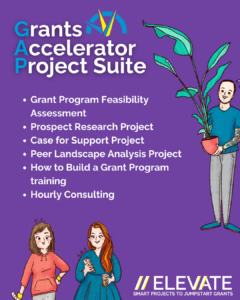 Through the new GAP Suite, we’re excited to offer a menu of project-based engagements that are cost efficient, maintain a laser focus on a specific component of an effective grants program, and are modular in order to build on each other in the way that makes the most sense for each organization. Each project within the GAP Suite is a four- or six-week collaboration designed to address a specific strategic fundraising need or question. While we have a standard sequence that many organizations will fit into, we can build out a series of engagements that best fits your needs and resources on a timeline that works for you.
We’ve built these projects for small organizations that are at the beginning of their grant journey as well as for those that are interested in launching a new initiative or program that would require new dedicated grant funding. They are perfect if you are looking for guidance on how to get started with grants or need to figure out how to convert your initial seed funds into a more sustainable pipeline. Because we know that it can be difficult to commit to a long-term engagement, these projects are intentionally short and highly focused. At the end of each project, we’ll discuss what your next steps could look like within the GAP suite or within your organization.
If you’re interested in learning more about these new options, check out the GAP Suite page on Elevate’s website. On that page, you’ll find more information about each of the different projects and instructions on how to get started. You’ll also find information on how to join an upcoming GAP info session where you can ask questions before you get started. We look forward to seeing you there!
Welcome back for a third installment on our Elevate Q&A series, where we “pass the mic” to a member of our extended philanthropic family to examine issues pertinent to the sector and nonprofits! (If you missed our previous conversations, please check out our Q&As with Wade Munday, Bridgestone America’s Director of Corporate Philanthropy; and April Walker, founder of Philanthropy for the People, where we explored some of the challenges and opportunities nonprofits and philanthropists face in pursuing a more equitable approach to their work.)
This time, I spoke with Brian Rosenbaum, the Development Officer for A Place Called Home (APCH), where he holds a portfolio of 150 major and mid-level donors and oversees the organization’s monthly giving program..
For 30 years, A Place Called Home (APCH) has provided South Central Los Angeles youth with a safe, nurturing environment and proven programs in the arts, education, and wellness to help them improve their economic conditions and develop healthy, fulfilling, and purposeful lives. APCH has directly served more than 20,000 youth members through its core school day, after school and summer programming, and over 150,000 local residents through family and supportive services including food, clothing, and holiday toy distributions, counseling, voter education, and community organizing.
Brian is a Southern California native with 18 years of U.S. and international nonprofit experience. He earned his BA in Psychology and Spanish from UCLA and his Masters in Social Work from Columbia University, specializing in program development and community organizing.
My conversation with Brian covered how he leverages his social work training in his current fundraising work, what he sees as the key to successful partnerships with donors, and how he has implemented DEI principles throughout his career.
What It Takes to Successfully Engage Donors
Johnisha Levi: How do you draw upon your background in social work in your current fundraising role?
Brian Rosenbaum: The core values of social work include meeting people where they are, leveraging a strengths-based approach, and capacity building. Each of these is applicable to nonprofit fundraising and communications.
As a nonprofit leader, I also consider ways in which we can hold space for each other to feel seen, to bring our full selves to our work, and to make our best contributions in this world. It’s about discovering ways to pour inspiration into people.
JL: I imagine these values help you to build strong and trusting relationships among colleagues. How would you describe your approach to building relationships with major donors and other partners?
BR: Something that I like to talk about is how “relationship” is sort of a neutral word. You can have a good relationship. You can have a bad relationship. You can have a distant relationship or a close one. On the other hand, a partnership has only one connotation. If you are partners, you are paired.
In a true partnership, everyone gets their needs met, everyone feels heard and seen. And then you grow together and evolve. That’s how I see my role within my staff, with other departments, and with donors; we are partners, and more specifically, we are partners in impact.
When I was at United Way of Greater LA, one of the ways that we described the role of a fundraiser was as a “philanthropic concierge”. It’s all about understanding the impact that a donor wants to make, their priorities, their capacity, their affinity, and their connection to the cause, and then using this information to compose a menu that is in alignment with their passion and interest with our very real funding needs. In implementing this approach, we created meaningful partnerships with donors that led to real impact for our community.
JL: Can you give me an example of your work with a prospective donor that exemplifies this idea of partnering in impact?
 BR: I will share an example of resuscitating a relationship that lapsed prior to my arrival at the Los Angeles Ronald McDonald House. I told my boss, “Challenge accepted.”
First, I did a little bit of email outreach to the lapsed donor, and when I didn’t get anything back, I got her on the horn. She was at the grocery store and said she would call back, but she didn’t.
I was tenacious. I got her on the phone again. She shared that she was really disappointed in the lack of appreciation and stewardship. And you know what? Sometimes you just gotta listen. And as a social worker, I embrace any chance I get to listen to people, to really understand what’s going on for them. I told her that I was mortified and angry to hear that she didn’t get the recognition that she deserved. And that she deserved to know the impact of her gift.
I explained how I would do better. I made a list of promises to her, and I delivered on them. Then I brought her in for a tour to see the impact of her gift. At the end of the tour we were sitting down in the dining room having some coffee when she asked about our current needs. I shared a few of our funding priorities, and she said, “Good. Send us a list. You know the things we care about. We’ll see what we can do.”
She and her husband care about safety and security, and comfort and care. So we created a menu with various projects and different price points that were aligned with these interests.
I talked with her several months later. It took some time. But at that point, we settled on a project that satisfied both of our needs – at their previous giving level – and we transformed the broken relationship into a partnership.
Most Important Piece of Advice for a New Fundraiser
JL: You’re clearly a seasoned cultivator and partnership-builder. What advice would you give to a new fundraiser about how to approach donor cultivation?
 BR: I would say, lean into curiosity, be a sponge. Whether you are stewarding or cultivating donors, know those lists of questions to ask donors from a place of authenticity.
One of my favorite questions to ask that people don’t expect is, “How did you become generous?”
It is also crucial to have genuine curiosity about how a donor would like to be engaged. For example, asking, “Can we schedule some time in two weeks to reconnect to see what you thought about this idea?” Or offering, “Can I send you a quarterly update, because you’re part of our impact?” People rarely say no to this last one.
Tenacity is also important: keep trying. We have to respect donors’ wishes but sometimes it is just a ‘no’ for right now.
The Importance of Applying a DEI Lens
JL: Nonprofits and philanthropists are increasingly focused on ensuring that diversity, equity, and inclusion is the lens through which they implement social change. Can you share a little about your own journey with DEI over the course of your career? What are some of the key lessons you’ve learned?
BR: Graduate school really helped me recognize the power and privilege that I bring into rooms and the fact that every white person is on their own journey of unlearning their racism. Biases are in the air that we breathe. You’ve got some sexism in you. You’ve got some heterosexism in you. You’ve got some ableism in you. You’ve got some nativism in you.
It’s like the moving walkway at the airport; you’re just going to be carried to the end unless you start walking the other way. But it takes a lot of self-work.
I committed myself to doing that work when I came back to LA after grad school, starting with getting involved in AWARE-LA (Alliance of White Anti-Racists Everywhere-Los Angeles). They hold both white-only spaces and multi-racial coalition building spaces with the aim of holding each other accountable and in recognition of the fact that people of color should not have to teach white folks about our own racism.
Subsequent to that, and surrounding the events of 2020 following George Floyd’s murder, I was part of an organization that really took advantage of the opportunity to unpack its past. It opened up a giant, very important conversation about some historical trauma that had happened in the organization and that was still affecting staff.
Out of this process came a renewed sense of responsibility, accountability, and personal growth; you don’t get that opportunity very often.
JL: How do you bring these values that have shaped your own thinking about DEI into your partnership building and donor engagement work?
 BR: I am passionate about ethical storytelling. This means presenting our clients as the heroes of their own story, not people who are broken and need to be fixed. We might be experts on suicide prevention, or food insecurity, or homelessness, but the client is the teacher: they are the experts on their experiences, and should be positioned as such. Sometimes I explain this as seeing the two sides of the coin when it comes to a person. Everyone has both strengths and struggles.
Ethical storytelling is about finding the balance – truthfully representing stories and situations so that we are educating our audiences about the issues that people are facing, while also including the nuances, the complexities, all of the realities of the situation.
Every time we don’t use an ethical storytelling lens, we do damage by reinforcing negative stereotypes. Imagine the negative impact on a client who actually reads that story in the newsletter or in the annual report or on social media!
With that client in mind, I aim to apply a frame of ethical storytelling in my work as a fundraiser.
JL: That is sage advice! What are a few best practices when it comes to ethical storytelling that you employ?
BR: I have the site www.ethicalstorytelling.com bookmarked and use it all the time. For instance, there is a great media consent form that we utilize. It offers individuals the power to consent to share their story or their likeness in a way that is comfortable for them.
It is also important to make determinations about how to use client images and video in a way that is complementary and uplifting, as well as to include clients in the editing process, and to allow them to approve content.
Interested in learning more about ethical storytelling principles? Sign up for our August 2024 webinar, Introducing and Empowerment Framework for Grant Writing, and look for more resources coming your way on this blog!